Biting is a behavior that can be alarming for parents to witness, especially if it happens at preschool or daycare. Whether your child is the one doing the biting or is on the receiving end, it’s important to understand that biting is a common, age-appropriate behavior for young children. The good news? It’s also something they typically grow out of, with the right guidance and support.
Why Do Children Bite?
Biting can happen for a variety of reasons, and the cause often depends on the child’s age, stage of development, or even underlying needs.
Typical Biting Ages
- Infants (0–12 months): May bite as a sensory experience, often while teething or exploring their environment with their mouth.
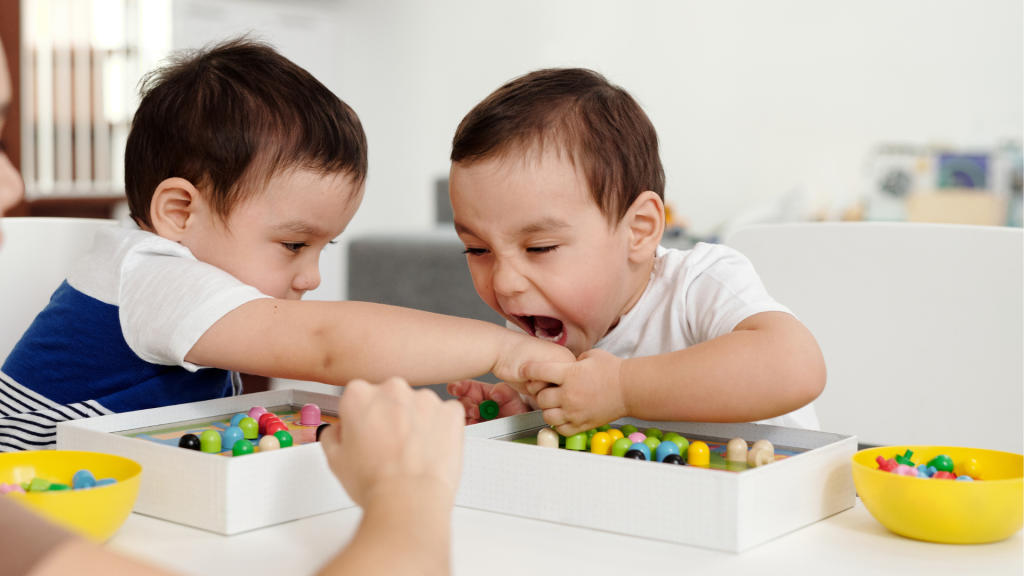
- Toddlers (12–36 months): This is the age group most likely to bite. They’re still developing language skills, emotional regulation, and impulse control.
- Preschoolers (3–5 years): Biting becomes less frequent but may still occur in response to strong emotions, frustration, or difficulty solving problems socially.
- Teething: The pressure of biting helps soothe sore gums.
- Communication: When toddlers can’t express their needs or emotions verbally, they may resort to biting.
- Frustration or Anger: A child may bite when another child takes a toy or invades personal space.
- Overstimulation: Loud environments, transitions, or crowded spaces can overwhelm young children, leading to biting as a coping mechanism.
- Seeking Attention: If a child notices they get a big reaction when they bite, they may repeat the behavior.
- Imitation: Children may copy behavior they’ve seen from peers, siblings, or even in media.
- Underlying Developmental or Sensory Needs:
Some children bite due to sensory processing differences, delayed communication skills, or other special needs. For example:
- A child with sensory processing disorder may bite to regulate input or relieve anxiety.
- A child with speech delays may become frustrated and bite when unable to express themselves.
- Children with autism or other developmental delays may use biting as a way to communicate or cope with overstimulation.
What Parents Can Do at Home Helping your child stop biting is all about consistency, calm reactions, and teaching appropriate ways to express feelings. Here’s how you can support your child at home:
- Stay Calm and Clear If your child bites, respond firmly but calmly. Avoid yelling or dramatic reactions. Say something like
- “Biting hurts. We don’t bite people.”
- Set a consistent message that biting is not acceptable.
- Teach Alternatives Help your child find other ways to express their needs. For example:
- “Use your words: Say ‘I’m mad’ or ‘That’s mine.’”
- Offer safe items for teething, like a cold teether.
- Teach and model phrases like “Can I have a turn?” or “I need space.”
- Reinforce Positive Behavior Praise your child when they use words, share, or express emotions in a healthy way. “I’m proud of you for telling your friend how you felt instead of biting.”
- Watch for Triggers Keep a log of when biting happens. Is it during transitions, group play, or when tired or hungry? Knowing the “why” can help you prevent the behavior.
- Use Books and Role Play Books like Teeth Are Not for Biting by Elizabeth Verdick help children understand biting in simple terms. You can also role-play social situations and practice what to do instead of biting.
- Communicate With Caregivers Stay in regular communication with your child’s preschool or daycare teachers. Share strategies that work at home and ask what’s being done in the classroom. Consistency between home and school is key.
- The biting is severe or happens frequently beyond age 3–4.
- Your child seems unusually aggressive or withdrawn.
- The behavior doesn’t improve with guidance and consistency.
- You suspect developmental delays or sensory processing concerns may be contributing to the behavior.